
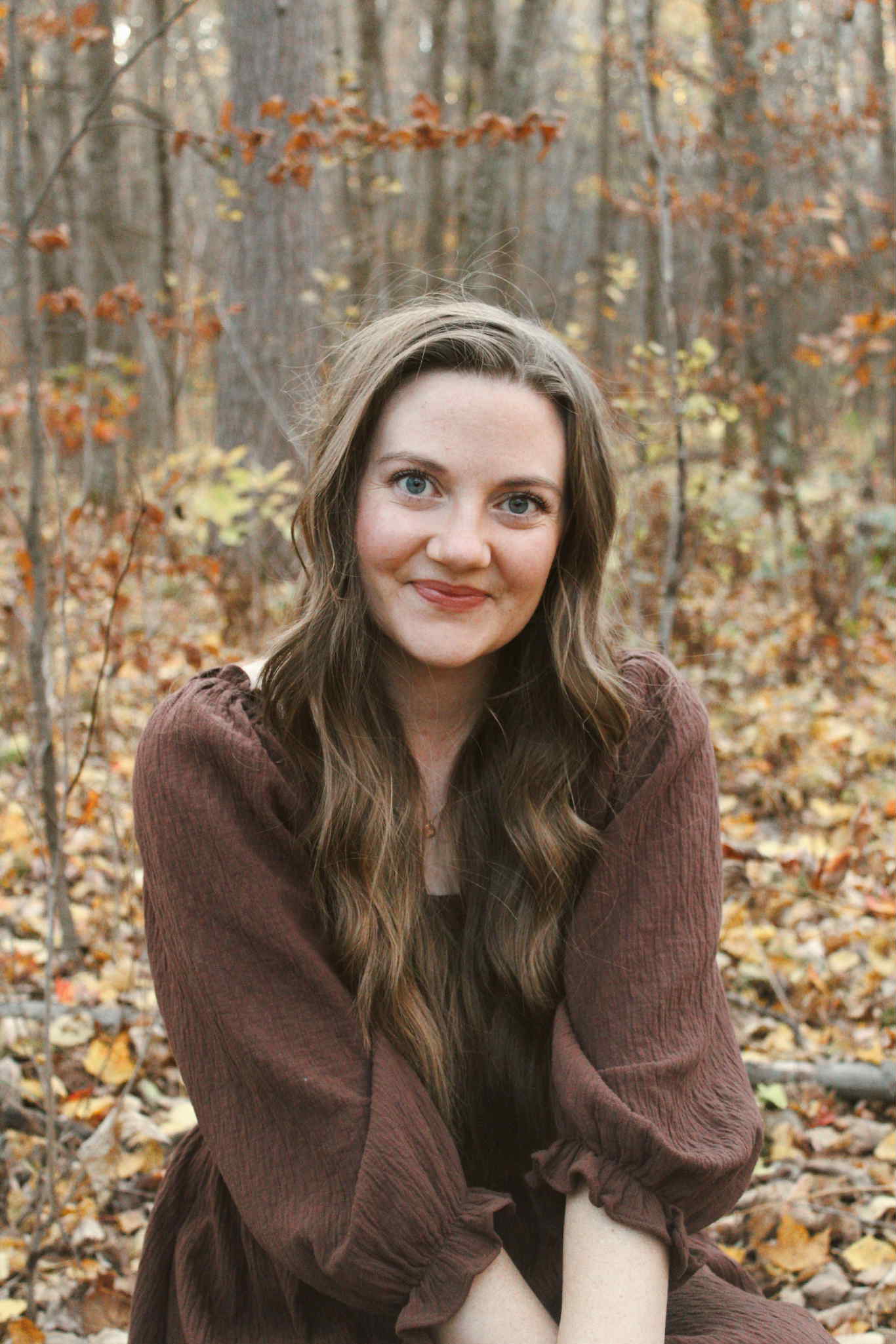


Join us for a special edition interview with the author of God Made Me Good, by Hannah Saeger.
Jacinta Wick:
Hello and welcome to Two Hearts True Healing for a special edition podcast for the holiday season of Christmas. We are working to make sure that you have great content and also get time away with our families in this most blessed of times. When this airs it will be near Christmas but is previously recorded and not live.
I am pleased to announce a very special person who will be joining me, a longtime friend who is near and dear to my heart, who happens to be my cousin and the godmother of one of my children. She recently had a children’s book published called God Made Me Good in October. Hello Hannah, can you introduce yourself to my listeners?
Hannah Saeger:
Hi, thanks for having me. Yes, my name is Hannah, a wife and stay-at-home mom but I also write in various capacities and I work part-time as a fertility care practitioner. I have two toddler boys and it’s definitely a joy to be their mom.
And yeah, I have a book called God Made Me Good, which is a children’s book and that just launched in October from Pauline Books and Media.
Jacinta Wick:
Wonderful, and we’ll talk more about where we can find this book closer to the end but I’d love to just jump in and see the passion behind this book. Can you tell me what gave you the passion to write this book and a little background?
Hannah Saeger:
Yeah, I wrote this book kind of as a way to express some of the truths that I needed to hear as a young person and that I hope many children and their parents will get to hear as they read this book. I struggled a lot with body image as a teenager and through college and identity but I had an encounter with the Lord at a Seek conference in college and that really started me on a long journey of healing. And this book is, it really takes theology of the body and scripture to explain the gift and goodness of the body to children.
So it really uses concrete examples that are easy to understand for children and the illustrations that were done are just beautiful and visualize those words as well and so I’m really excited for this book to get into the hands of children and their parents.
Jacinta Wick:
Oh, so beautiful. God Made Me Good, that is such a good topic to talk about. Can you tell me more about this because it can be such a struggle sometimes to frame this correctly, especially to our children.
Because I think in former times it was easier to say like, that is very bad or good girl without really like going that deeper step to like give the constructive direction to really affirm or discourage different ways of responding to the Holy Spirit and different actions and different consequences of our actions. Can you talk about that a little more?
Hannah Saeger:
Sure. Yeah, I think the book is really about the inherent dignity of each person and the fact that God made us and he gave us a body and a soul and that our bodies are good because God made them and they have a purpose and really allow us to know and love others and to know and love God and so we don’t look at these different parts of our body and say like this is good or bad. We say God made my body and it’s good, period.
And so that’s really what’s at the heart of the book.
Jacinta Wick:
This makes me think of like JP2 and Theology of the Body. Can you talk a little bit more about that theology of making visible what is invisible in the spiritual and the divine? Just talking more how this relates to when you’re momming and relating with your husband and in your own relationship of wellness and self-care.
Hannah Saeger:
Okay, that’s a lot to unpack. But yeah, that quote, I love this quote from John Paul II where he says, the body and it alone is capable of making visible what is invisible, the spiritual and the divine. And I think what that is kind of addressing is this sense of the sacramentality of the body in that our body is kind of the visible expression of our soul and that through our bodies we, like I said, we can really come to know others and come to know God.
And so that points to the inherent goodness of the body and the sacredness of the body. And as a mom, I really want my children to know that and to know that their body is good and that they are their bodies and what they do with their bodies matters because what you do with your body affects your soul and vice versa. And for children, I think this is really important because, yeah, in our culture there’s so many different messages that are coming at us about our bodies, both like who we are in our body, whether or not our bodies matter, what our bodies look like, beauty standards, all of these different things that are forming our children, whether we like it or not, from the culture.
And so I want my children to really know what is true. And something that I wanted to share that is kind of a staggering statistic to me, but there’s some studies from Lowe’s and Tigman, and I could send you the links to these studies if you want later, but in summary they found that young children, especially girls, body dissatisfaction starts around the age of six for young children and specifically like a desire to make your body smaller and just already this desire to change your body. And so I really want to kind of combat that message and that our children should be not so focused on that, like that external part.
And so with my book, I kind of went through just various concepts and aspects of the body, because we have like our internal senses that God gave us that are good, like, I’m tired, I need to sleep, I’m hungry, I need to eat. And how, when we listen to our body, we can honor our body by doing that. And then kind of that physical aspect to where you have examples of, of maybe a child thinking like, I wish I had curly hair like my friend, or I wish I have blue eyes instead of brown eyes.
So really concrete examples that children can relate to. And then that experience of how do I know and seek and hear God’s voice even through my experience of my body. So there’s kind of all of these different things wrapped up in the book in kind of an easy to understand way for kids and for parents.
Jacinta Wick:
That’s beautiful. So I’m going to talk to us a little bit now, and ask you more on the broader sense. So not just with children, but where should one start to repair one’s mentality on this with that constant pressure that you were speaking about from our culture, to fill ourselves with all the stuff, to be on social media, or just like the bodily passions, like gluttony and avarice, or just thinking too much about how you look, so vanity.
Hannah Saeger:
Yeah. I guess with those kind of things, I think it really comes back to having a good foundational understanding of our identity as daughters and sons of God, and being rooted and grounded in your identity as a daughter or son of God, and that everything else can flow from that. And so having a healthy or like a peaceful relationship with your body can really be cultivated when you are rooted and grounded in that core identity as daughter or son.
And so then all of those other things are also then affected by that, because that changes your worldview, right? So when you look at maybe self-care, or dealing with parents that have social media, or the things like diet culture, or whatever it is they refer to, basically everything, it can change your worldview to be like, I am actually, at my core, a daughter of God, and my body is a gift, and I can be a steward of my body and not idolize my body. And so then when I see things, like I’m tempted to compare myself to someone on social media, maybe, I can then say, hey, that person is also a daughter of God.
And you can just like stop and pray and be like, Lord, help me to see this person the way that you see them, and help me to see myself the way that you see me. And so that can kind of stop that comparison right in its tracks. And I think that the other thing is important, you know, like, in what we do or whatever, that you can look at your body in a way of, I would want to prepare for my body, to honor God, and I can steward my body well.
And sometimes that takes like, you know, maybe talking to a spiritual director or priest to get to kind of the root of like, why am I struggling with like, gluttony, or vanity, or whatever it is, those types of things you mentioned, it might take some deeper digging. But if you can have that framework of bringing yourself back to those truths of like, my body is good, I want to be a good steward of my body, and I want to honor God with my body.
Jacinta Wick:
Beautiful. Can you explain a little more, your own walk with this important truth of healing your body image and fostering that more peaceful relationship with it?
Hannah Saeger:
Yeah, I, I’m happy to share about that. I, I’ve shared quite a bit, like, on my own social media and things like that. But I really struggled with my body starting, like in early high school, and throughout college.
And so I really fell into a lot of disordered behaviors and things with like food and exercise. And so I was really, really struggling. And it wasn’t until I was a sophomore in college, when I went on a conference called seek.
And I just had this encounter with the Lord where he really placed on my heart the need for healing. And it was really the Holy Spirit that was like, you need to run the confession because that is a place of healing. Like, that was my concrete step of like, how in the world do I start a journey of healing.
And that was the very first thing was like, I need to go to confession and just see this as an opportunity for healing. Because, and I want to make this very clear that like, mental health struggles or like, a full eating disorder is not necessarily a sin. But it is often rooted in this deep woundedness.
And so being able to go to confession and talk about that openly is hugely healing. And there could be like sin involved in that as well. But I think for me, it was really like, I just need to like, lay it all out there.
And I really need to bring this struggle to the Lord, because that’s who you’re talking to when you go to confession is Jesus, right? So that’s what I did. And that was really the first step there for me.
And really, that particular priest in confession for me was just absolutely like Jesus to me. And he was so gentle, so patient. And he really invited me to take a step forward in healing and to see that this was just the start.
Like this isn’t going to be an overnight thing. Like, of course, God can do that, because he can bring about healing in that way, where it’s like a miraculous quick kind of thing. But this was like, no, this is like the start of something.
And this is going to have to continue. And you’re gonna have to be intentional about seeking out healing. So that was the start of that for me.
And so over the years from then, it was a lot of, yeah, intentional recovery and healing on my part. And then later on, even not even until after my first baby was born, did I seek out some like professional counseling in that area. So it’s been a long journey.
But there has been a lot of healing. And a lot of it was, it’s both this, like the physical, like you need to change your behaviors kind of healing. And physically healing my body, I had lost my menstrual cycle for like six years.
And so I needed to recover that. And then also like the heart and soul healing. So it was kind of like two sides.
Like the physical healing and then also that deeper heart healing that needed to happen.
Jacinta Wick:
That’s also very similar, actually, to where God started healing with me in that that whole intentionality is so important that taking that step to find our Lord and to just go to the means that he provides. You mentioned that you work with fertility. Could you just talk briefly a little bit on how much health and wellness can play into this whole idea of feeding the right mindset of being present to what your body needs?
And also how it can also really contribute to how you might be experiencing something?
Hannah Saeger:
Yeah, I absolutely love my role as a fertility care practitioner and all that I’ve learned with that. And like I said, I have lost my menstrual cycle, my fertility for years. And so in recovering from that and trying to get that back, I really learned a lot about how important the female menstrual cycle is for health, for physical health, emotional health, literally everything, bone health, heart health, brain health, all of these things the hormones that your body is supposed to be making are so, so important for health.
And so that became a catalyst for me in my recovery journey was trying to get my menstrual cycle back. And I really believe now that cycle education and body image go hand in hand. How can you believe that your body is good if you think that your fertility is bad?
How can you believe that as a woman, the way that God designed your body is good and beautiful if you are constantly fighting against your fertility? And so many women struggle with that. And we live in a culture where we try to control everything, our fertility, our body, all these different things.
But yeah, it was really beautiful for me to really grow an appreciation of the way that God designed my body as a woman with my menstrual cycle and my fertility. And that really helped me to honor and appreciate my body while I was in recovery and to be okay with my body responding to recovery how it needed to because I was then seeing how that was affecting my menstrual cycle. And your menstrual cycle is a vital sign of health.
And so I could in real time see my menstrual cycle improving and just the fact of getting it back. I remember specifically when I got my menstrual cycle back and just being so happy and so proud of myself. I’m so thankful to the Lord for bringing me to this place where I finally got my first period back.
But then from there, really, like, letting that motivate me in taking care of my body and honoring my body in a way that I believe is glorifying to God. And so I think that now as a fertility care practitioner, being able to teach women about how good their fertility is and how good their body is, is so powerful and so important. And so I really believe it’s a gift.
I believe that fertility is a gift and that it does point to the goodness of your body, especially as a woman.
Jacinta Wick:
Yeah. Can you just maybe say something to the women out there that are struggling with their fertility right now on something like maybe three things that they can do to start having a better relationship with thinking about their fertility and also treating their fertility as a gift from God and what they should do on that health and wellness journey to try to get their hormones in line?
Hannah Saeger:
Yeah, I guess something that comes to mind is, like, your body isn’t broken. And even if you have struggles with your cycle, you have painful periods, you have endometriosis, you’re struggling with infertility. It’s a really, really sensitive topic.
And so I just, I understand how difficult and painful that is. And I would say even in those moments, like, your body is still good. Like when God created us, when he says in Genesis that he created male and female and that they were very good, he didn’t say, like, you’re very good if blah, blah, blah.
Like, there wasn’t a condition on it. But then the fact that we live in a broken world, we have struggles with our bodies where we’re like, my body isn’t functioning the way that I want it to, or you’re dealing with infertility or chronic illness and different things like that. And I’ve struggled with that too, where you have literal suffering in your body.
But it’s still the fundamental truth that your body is still good, and your body is still a gift. And it can be hard to see it that way in the moment. But I would definitely encourage that it’s okay to seek out help.
And I think NAPRO technology is a huge resource for that, for fertility-related problems. And that if you are struggling with your menstrual cycle or your fertility in any way, you can actually seek out help and seek out answers from NAPRO, from a fertility care practitioner, from a functional medicine standpoint, that it’s okay to do that, and it’s good to do that. And that maybe in that process, to just be really gentle with yourself and gentle with your body, and to really take that to prayer, too, and really ask for the grace to do what you can in the moment to take care of yourself out of love and not out of fear.
And yeah, I guess I just… from there, yeah, just that kind of acceptance of whatever you’re going through can be really hard. But again, just like praying for the grace to do that and seeking out help and asking for help and support.
I don’t know if that fully answered your question.
Jacinta Wick:
It did. Thank you. It did answer the question, and those three things that you were talking about first, having the healthy image, being gentle to yourself, and also seeking help.
Those are very good things, as well as the NAPRO technology, as that’s also been huge in my healing walk as well. So there’s so much we could say right now about talking to our daughters about this. What is maybe one or two things?
I know you have boys and I have girls, but what is one or two things that you would encourage moms to start talking to their daughters about this, like with just feminine health and being comfortable in their own skin?
Hannah Saeger:
Yeah. I think, yeah, just making it kind of a normal part of life and talking about how, if you’re talking specifically about fertility stuff, just that, really framing it in a positive way of like, this is a gift, your body is good, your body’s kind of consistent with you. When it comes to self-image or body image, in some ways, I think you just need to almost like not talk about it too much.
Like, to not draw attention to insecurities and things like that. Just kind of honoring them as they are and appreciating the way that God made them and kind of bringing in those affirmations of like, God made me good. And being able to listen to your body is huge.
With my boys, you need to take a nap or like, for food. And like, it’s a really good thing for me to really encourage them to listen to their bodies and not be like, well, you have to tune into those internal cues and signs and just be able to listen to your body and understand that that is a way of honoring their bodies. But yeah, I guess that’s my thoughts.
Jacinta Wick:
Wonderful. So what would you want to tell any dads out there in telling their daughters or sons? Like, how can they really help with this image?
And how can they really reaffirm this goodness for their children?
Hannah Saeger:
Yeah, I think kind of the same things. But it’s okay for fathers to delight in their children and to show their daughters that they’re worthy of respect and that they’re beautiful, and that that’s not conditional. And just being present for them, to talk to them, to acknowledge, like, their efforts in things, their virtue, their kindness.
I think loving goodness is great, too, of course. Fostering that relationship through what you see in your children. Like, one of my kids is a Dutch, so Peter and I both try to think about that when we think about what they might not need right now when they’re having a heart attack and when they’re feeling down.
Like, they maybe need some quality time, like sitting in the book, or maybe they need to just snuggle on the couch or whatever. So I think that can be really good for fathers, too.
Jacinta Wick:
And we have time just for a couple more questions, but what would you tell your younger self in the struggle to live up to our God-given worth?
Hannah Saeger:
Um, yeah, I would tell my younger self that, like, you’re okay. You are a better God and that your worthiness and love is independent of something that is always changing, but rather than the fact that you’re a better God and that changes. And yeah, to just be gentle with yourself and to focus on the people around you.
Jacinta Wick:
Beautiful, because community is so important. Without that community, it’s just really hard to walk forward. So, um, do you have any closing thoughts that you really want our listeners to know?
Hannah Saeger:
I would just say, I hope you walk away encouraged from this podcast. And if you are interested in my book, God Made Me Good, you can find that on Amazon or from paulinestore.com. And I have an author page on Facebook, and then my Instagram as well is at hannah underscore e underscore saeger. (hannah_e_saeger)
So you can always follow along there or message me on there if you have any thoughts or questions for me. But yeah, I would just walk away with the message that your body is good and that you are a child of God.
Jacinta Wick:
Beautiful. I was just gonna ask you that after you said that, I was gonna say, how can we reach you if we want to get more information or talk to you? So do you mind just saying one more time where they can find you?
Hannah Saeger:
Yes. So you can find me at hannah underscore e underscore Saeger (hannah_e_saeger) on Instagram, and at Hannah Sager author on Facebook.
Jacinta Wick:
Beautiful Hannah, thank you so much for joining us today. You have really given us a lot of good things as food for thought. It’s been a blessing to have this time with you.
And just thanks so much for coming and may the Christ child bless you and your family abundantly in this season. And also, you can always reach us at two hearts true healing.com or at our two hearts true healing at outlook.com email and we can also put you in touch with Hannah. We are also on Facebook and sub stack and reach out to Hannah if you have further questions that just really touched you.
And I hope you and your families have a wonderful Advent and a very beautiful Christmas. And may the Holy Family watch over all of you and guard you. And until next time, go with God.of you and guard you. And until next time, go with God.